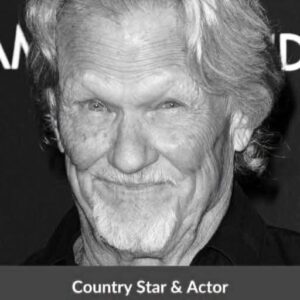
Dion Anderson’s passing at the age of 87 marks the end of a life that reads less like a conventional acting résumé and more like a sweeping historical narrative that crossed continents, disciplines, and eras of profound global change. Born on August 6, 1938, in Cameron County, Texas, Anderson came into the world at a time when the United States was still recovering from the Great Depression and unknowingly moving toward a rapidly transforming post-war future. From the very beginning, his life seemed to resist simplicity. Friends, colleagues, and later collaborators often described him as someone who carried an unusual blend of intellectual curiosity and grounded humility, a man who could speak with equal ease about literature, political systems, and the emotional demands of performance. His early years were shaped by a strong work ethic and an appetite for knowledge that would eventually lead him to earn multiple academic degrees spanning English Literature, History, Political Science, Economics, Television Production, and Fine Arts. These accomplishments alone would have been enough to define a conventional academic or cultural career, yet Anderson consistently moved beyond expectation, driven by an internal sense that life was meant to be experienced rather than narrowly categorized. That instinct would take him from Texas classrooms to international service roles and eventually onto the screen in some of television and film’s most enduring works.
Before he ever stepped into Hollywood, Anderson’s life was already marked by service and global engagement. He joined the U.S. Army and served in the Finance Corps, a role that demanded precision, discipline, and accountability during a period when military structures were deeply intertwined with Cold War geopolitics. Yet even during his service, Anderson continued pursuing education with remarkable determination, eventually studying at the prestigious London School of Economics, where he earned advanced degrees in Economics and Political Science, followed by further artistic training at the London Academy of Music and Dramatic Arts. This rare combination of analytical rigor and artistic development would later define his career, allowing him to move fluidly between administrative, diplomatic, and creative environments. His professional journey expanded when he began working with Voice of America, contributing to film and television production at a time when media was becoming a central tool of international communication. During the Vietnam War era, Anderson helped establish television network infrastructure in South Vietnam, training local staff and supporting the development of communication systems in regions undergoing intense political and social upheaval. Later, his work extended into Iran with the U.S. Foreign Service and the State Department, where he participated in building radio and television networks while also teaching English, organizing cultural exhibits, and producing theatrical performances. These experiences placed him at the intersection of culture and diplomacy, shaping his understanding of storytelling as something far more powerful than entertainment alone.
Anderson’s transition into theater and acting was not abrupt but rather an organic continuation of a life already steeped in communication and expression. After completing his studies at LAMDA, he was appointed theater director in West Virginia, where he began shaping stage productions with a disciplined yet deeply human approach. He understood performance not merely as performance but as translation—of emotion, history, and identity. His early work included teaching Shakespeare in Florida, where he developed a reputation for making classical texts accessible and emotionally resonant for modern audiences. From there, his path led him into acting roles that steadily built his credibility within both theater and screen circles. Though he never pursued celebrity in the conventional sense, Anderson’s presence in productions such as Shakespeare’s Henry VI and Tennessee Williams’ Cat on a Hot Tin Roof revealed his ability to inhabit complex emotional landscapes with authenticity and restraint. These performances laid the groundwork for his later recognition in film and television, where he became known for portraying grounded, often authoritative characters who carried quiet intensity. Unlike many actors who chase visibility, Anderson seemed to accumulate roles through consistency and reliability, building a reputation as a performer who brought depth even to smaller appearances.
His most widely recognized role came in the form of the prison guard known as Head Bull Haig in The Shawshank Redemption, a film that has since become one of the most celebrated cinematic works in modern history. While his screen time in the film was limited, his performance contributed to the oppressive atmosphere of the prison setting, helping to shape the emotional weight that defined the story’s enduring impact. Anderson’s portrayal was not designed to dominate scenes but to reinforce the systemic structure within which the main characters struggled for dignity and survival. In later years, audiences also came to know him through his appearance in Gilmore Girls, where he played the character Burt, adding yet another layer to his diverse acting portfolio. These roles, though distinct in tone and scale, reflected a consistent thread in Anderson’s career: the ability to embody realism without overstating presence. Industry colleagues often noted that he approached every role, regardless of size, with the same seriousness he once applied to academic study or international development work. In doing so, he left behind a body of work that may not have always placed him at the forefront of fame but ensured his contributions were meaningful and memorable within the fabric of each production.